
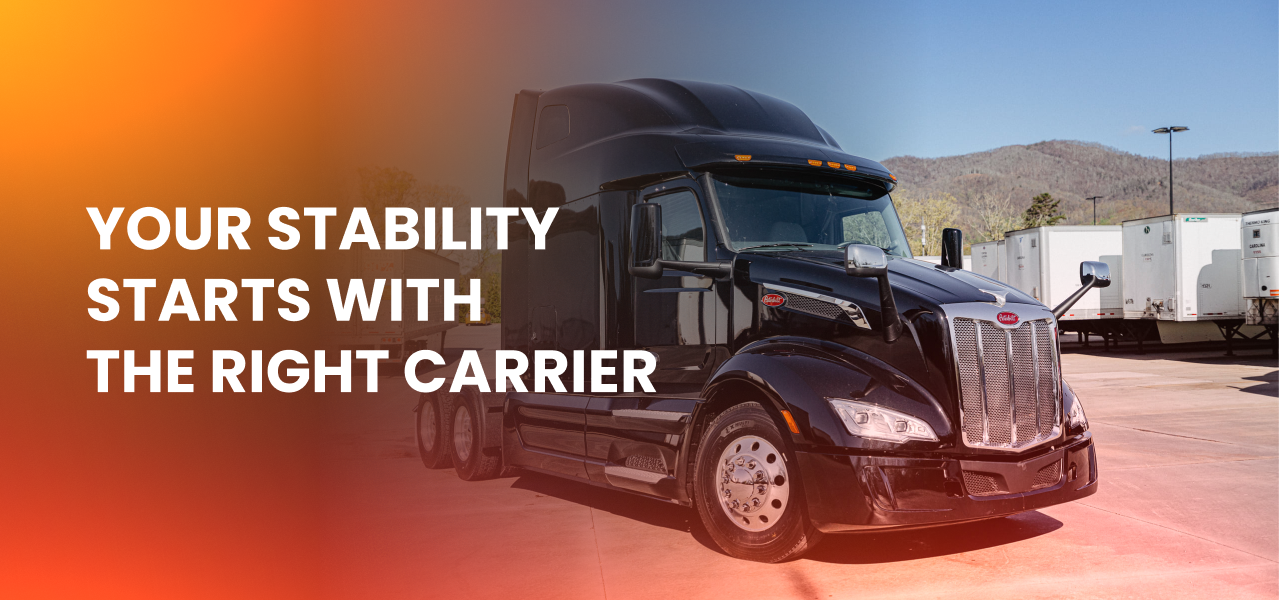
Many companies strive for agility because of ongoing logistics volatility. At first glance, it may signal operational strength. But in reality, what many supply chains describe as agility is often a system that has normalized constant reaction within transportation execution. That’s why your stability is compromised at the core of your supply chain strategy, and it impacts operations at the carrier level.
The right carrier will prevent many disruptions from turning into operational fires, reducing the need for constant reactive intervention in the first place.
Let’s break down the roots and practical ways to improve your daily logistics stability.
Transportation absorbs the variability
Experts note that the volatility of 2025 is carrying fully into 2026 and is “far from over.”
In most cases, the roots of the instability are at the beginning of the supply chain, where production changes, inventory adjustments, supplier delays, or demand fluctuations introduce variability into the broader supply chain system.
Once these shifts accumulate, transportation plans that were originally designed for predictable shipment execution suddenly become exposed to continuous revision.
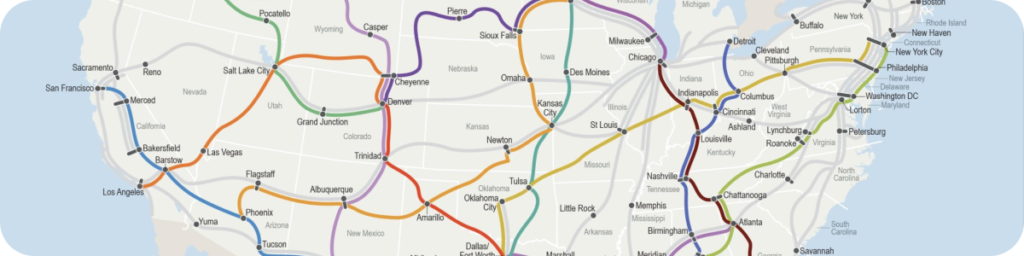
In the U.S., over 70% of all freight is moved by truck, making transportation the final execution layer where upstream variability inevitably lands.
It naturally becomes the layer that absorbs much of the variability created upstream because transportation is the final stage of physical supply chain execution.
Transportation teams, therefore, become the operational buffer that allows the rest of the supply chain to continue functioning despite instability.
Reliable carriers deliver near-perfect predictability, with strong networks achieving up to 96% on-time performance.
The right transportation partner helps absorb instability, preventing small disruptions from escalating into operational breakdowns. The way transportation is structured determines how that variability is handled.
How the right carrier absorbs volatility
While everything in a supply chain is falling apart, the high-performing transportation partner brings the operation back on track.
- Real-time visibility for full transparency
For many organizations, visibility still breaks down in the middle mile. In fact, 37% of U.S. companies report a lack of visibility at this exact stage. This is where most disruptions begin before turning into urgent issues.
A strong carrier removes this blind spot by providing continuous tracking, live location data, and status updates that reflect real conditions on the road. This allows issues to be identified early, before they turn into missed appointments or emergency recoveries.
- Precise ETAs with real-time recalculations
Initial ETAs quickly lose value in a volatile environment. What matters is how fast they adjust to real conditions.
High-performing carriers continuously recalculate ETAs based on traffic, delays at pickup, driver hours, and facility congestion. In practice, ETA updates are refreshed regularly, often every few hours, so they can be used as reliable operational inputs rather than rough estimates. Accurate ETAs reduce uncertainty across the entire chain, including warehouse scheduling and customer expectations.
- Proactive updates
In unstable operations, a lack of communication creates escalation.
A reliable carrier does not wait for check calls or status requests.
Communication starts before questions arise, for example, when there is a risk of delay, a shift in pickup timing, or a change in delivery conditions.
This removes the need for constant follow-ups and reduces pressure on brokers and shippers who would otherwise need to chase updates to stay in control.
- Expert drivers who know the product and its transportation peculiarities
Execution stability often depends on the driver as much as on the system behind the load.
Experienced drivers understand shipment requirements, appointment sensitivity, and handling specifics. They recognize when timing is critical and how to operate within facility constraints.
They follow instructions, stay reachable, and do not disappear during transit. As a result, brokers do not need to search for the driver, repeat instructions, or step in to fix avoidable issues.
- Execution consistency
Consistency is one of the most underestimated factors in transportation performance. The difference is not in delivering one perfect shipment but in delivering the same predictable outcome every time.
When execution is consistent, transportation stops adding variability to the system. Planning becomes more reliable, fewer exceptions occur, and teams no longer operate in constant recovery mode.
This is where transportation becomes a stabilizing layer within the supply chain.
How Hugo Hunter turns execution into a system
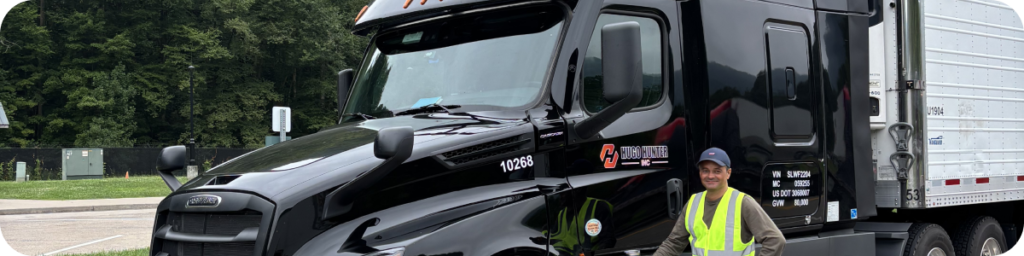
In practice, this level of execution is not accidental. It is the result of how the system itself is structured. At Hugo Hunter, this approach is built into the operating model. Visibility does not require additional effort from the team because shipment status, location, and progress are available instantly with just a few clicks.
ETAs are not treated as fixed after pickup but are continuously recalculated as conditions change. This allows delivery performance to remain consistently high and reduces uncertainty in planning.
Communication does not depend on requests or escalation. Updates are shared regularly every two hours, including current location and visual confirmation at each stage of the delivery, so control is maintained without constant involvement from the shipper or broker.
At the execution level, much depends on the driver. Shipments are handled by drivers who understand the requirements of the freight, the importance of appointments, and the specifics of different industries. As a result, the process does not require constant intervention and remains stable throughout the move.
Over time, this model creates a different kind of reliability. With a long-term approach to partnerships and operations since 2017, execution becomes not a one-time result but a repeatable standard. This is what allows transportation to stop being a source of instability and start functioning as a stable layer within the supply chain.
If your transportation still depends on constant follow-ups and manual intervention, it may not be a market problem, but a system design issue.
We meet your unique needs:
- Temperature-Controlled Freight Services
- Less-Than-Truckload Shipping (LTL)
- Full Truckload Shipping (FTL)
- Flatbed Shipping
- Expedited Delivery
- Last-Mile Delivery
- Drop Trailer Services
- Cross-Docking Services
- Warehouse Services
You can take a closer look at how this model works in practice with Hugo Hunter. Contact us now.